The Best Burr Grinders for Espresso, Ranked by Price
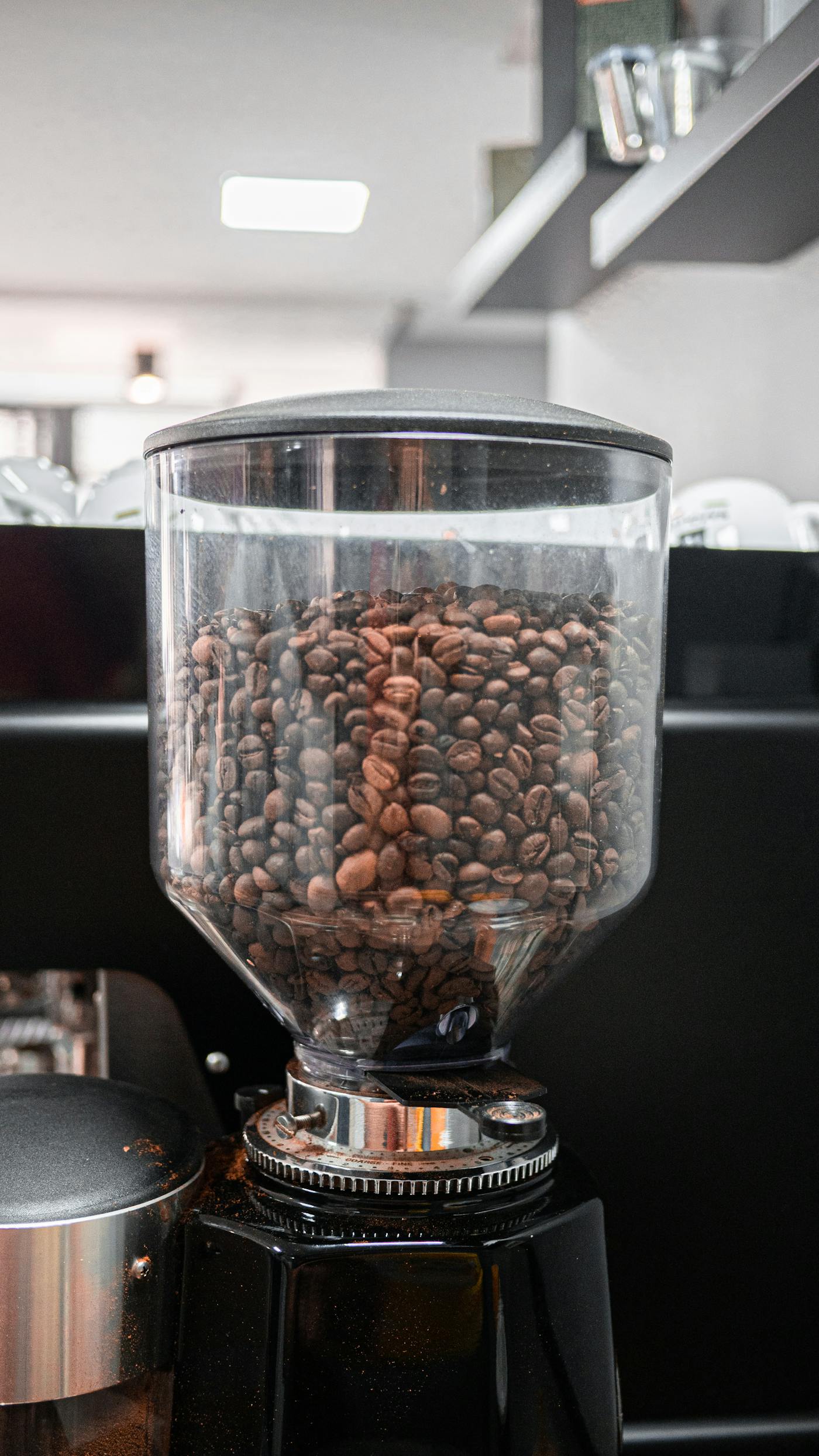
Short answer: If you’re starting out, buy the Baratza Encore ESP ($199) or, if counter space is zero, the 1Zpresso J-Ultra hand grinder ($199). If you want the last grinder you’ll buy for years, get the Niche Zero (~$649). Everything else on this list is a very good answer to a more specific question.
Here’s the thing most beginners learn too late: your grinder matters more than your espresso machine. A $500 machine with a great grinder beats a $1,000 machine with a bad one, every time. Espresso lives or dies on grind — how fine, how consistent, how fresh. So if you’re deciding where to spend, spend here.
Why espresso needs a burr grinder (not a blade)
Blade grinders chop beans into random-sized chunks. Espresso needs the opposite: thousands of nearly identical particles, ground fine enough to resist nine bars of pressure. Get that wrong and water either blasts through (sour, thin) or can’t get through at all (bitter, choked).
Only a burr grinder — two abrasive surfaces set a precise distance apart — can do this. And only some burr grinders go fine enough, and adjust precisely enough, to dial in espresso. A grinder that’s great for drip coffee is often useless for espresso because it can’t reach the fine end or can’t make small enough adjustments there.
Two features matter most for espresso:
- Stepless (or very fine-stepped) adjustment — espresso is sensitive. The difference between a great shot and a choked one can be a hair of grind size. Stepless grinders let you nudge infinitely; coarse-stepped ones jump past the sweet spot.
- Low retention / single-dosing — cheaper grinders trap grounds inside and hand you yesterday’s stale coffee. Single-dose grinders grind only what you put in, so every shot is fresh.
The 30-second ranking
| Grinder | Price | Burr | Best for |
|---|---|---|---|
| Fellow Opus | ~$199 | 40mm conical | Looks + budget, light espresso use |
| Baratza Encore ESP | ~$199 | 40mm conical | The safe first espresso grinder |
| 1Zpresso J-Ultra | ~$199 | 48mm conical | Zero counter space, travel |
| Eureka Mignon Specialità | ~$449 | 55mm flat | Quiet, set-and-forget daily driver |
| DF64 Gen 2 | ~$389 | 64mm flat | Flat-burr clarity on a budget |
| Niche Zero | ~$649 | 63mm conical | Buy-it-once single-doser |
All six genuinely dial in espresso. The price tiers buy you better consistency, lower retention, and nicer day-to-day living — not a different category of drink.
Under $250: where most people should start
Baratza Encore ESP — the safe default (~$199)
The Encore ESP is the grinder that finally made sub-$200 espresso grinding real. Baratza took their beloved Encore and re-geared it for the fine end, so it actually reaches espresso territory and adjusts closely enough to dial in. It’s small, it’s easy, and Baratza’s support and parts availability in the US are genuinely best-in-class — if something wears out in three years, you can fix it, not landfill it.
It’s not perfect: the adjustment is stepped (not stepless), so you’re picking from notches rather than nudging infinitely, and it retains a little coffee. But for a first grinder, it removes the single biggest beginner trap, and it pairs beautifully with a Breville Bambino or Breville Bambino Plus.
Fellow Opus — the handsome one (~$199)
If the Encore ESP is the sensible pick, the Opus is the good-looking pick. Single-dose styling, an attractive footprint that earns its counter spot, and burrs that reach espresso fineness. Out of the box it can be staticky and a touch clumpy — a quick spritz of water on the beans (the “RDT” trick) tames it. Choose this over the Encore if design matters and your espresso volume is light.
1Zpresso J-Ultra — the no-counter-space cheat code (~$199)
Don’t dismiss a hand grinder. The J-Ultra produces espresso grind quality that embarrasses electric grinders costing twice as much, takes up zero counter space, runs silent, and is genuinely a joy to use. The catch is obvious: it’s manual. Grinding a dose for espresso is real (if brief) arm work, every single morning.
Buy it if your counter is full, you travel, or you like the ritual. Skip it if “before coffee” you can’t be trusted to crank a handle.
$350–$450: the daily-driver upgrade
Eureka Mignon Specialità — the quiet workhorse (~$449)
There’s a reason the Mignon is a fixture on home espresso counters. It’s whisper-quiet (genuinely the quietest grinder here), stepless so you can dial in to a hair, and absurdly reliable — these run for years. Its 55mm flat burrs give clean, well-separated flavors.
The trade-off: it’s hopper-fed, so it’s not built for single-dosing — it’ll retain some grounds between doses. If you drink the same coffee every day and don’t switch beans often, that barely matters. If you’re a single-origin rotator, look at the DF64 instead.
DF64 Gen 2 — flat-burr clarity, single-dose, on a budget (~$389)
The DF64 punched a hole in the market: 64mm flat burrs and true single-dosing at a price that used to buy you neither. Flat burrs tend to give a brighter, more separated cup; single-dosing means every shot is fresh and you can change beans shot-to-shot with almost no waste. It out-performs grinders well above its price.
It’s a little utilitarian — some static and mess without a small mod or a spritz of water — and the styling is plain. But on grind quality per dollar, it’s hard to beat. Pair it with a serious machine like the Rancilio Silvia or Gaggia Classic Evo Pro and you’ve got a setup that punches into café territory.
$649: the one you buy once
Niche Zero — near-zero retention, buy-it-for-life (~$649)
The Niche is the grinder people stop upgrading after. Its conical burrs and clever design give it essentially zero retention — what you put in is what comes out, fresh, every time. It single-doses by design, runs quietly, takes up a small footprint, and looks like furniture rather than equipment.
Is it worth the premium over the DF64? If you value the near-zero retention, the build, and never thinking about your grinder again — yes. If you mostly care about raw grind quality per dollar, the DF64 gets you most of the way for a good bit less. The Niche is the experience upgrade as much as the cup upgrade.
How much should you spend on a grinder?
A useful rule of thumb: budget roughly 40% of your machine’s price for the grinder, and never go below a real espresso-capable model. That ratio is exactly how our build-your-setup tool pairs machines and grinders — it points a $499 machine at a ~$200 grinder and a serious $900 machine at a flat-burr single-doser.
A few honest scenarios:
- Tight budget, all-in-one machine? You may already have a grinder built in. A Breville Barista Express includes one — fine to start, upgradeable later.
- Separate machine under $500? The Encore ESP or J-Ultra is the move.
- Spending $800+ on a machine? Don’t pair it with a $200 grinder. Step up to the DF64 or Niche — otherwise the grinder is your bottleneck.
Frequently asked questions
Is the grinder really more important than the machine?
For taste, yes. The grinder determines particle size and consistency, which control extraction more than anything the machine does. Pros often say to spend equal or more on the grinder than the machine. At minimum, don’t pair a great machine with a cheap blade or drip grinder — you’ll waste the machine’s potential.
Can I use my drip coffee grinder for espresso?
Usually not. Most drip grinders can’t grind fine enough for espresso, and even if they can, their adjustment is too coarse to dial in the narrow espresso sweet spot. You need a grinder explicitly described as espresso-capable.
Conical or flat burrs — which is better?
Neither is strictly “better.” Conical burrs tend to give a rounder, heavier body; flat burrs tend to give brighter clarity and flavor separation. Both make excellent espresso. Don’t let the debate stall your purchase — burr quality and consistency matter far more than burr shape at this price range.
What’s “single-dosing” and do I need it?
Single-dosing means grinding only the beans you’re about to brew, rather than keeping a hopper full. It keeps every shot fresh and lets you switch beans with no waste. It’s a nice-to-have, not a must-have — but if you rotate coffees often, it’s worth prioritizing (Niche, DF64, J-Ultra).
Do I need a stepless grinder?
It helps a lot for espresso. Stepless adjustment lets you make the tiny changes espresso demands. Stepped grinders like the Encore ESP can still dial in — you just have less fine control. If budget allows, stepless (Mignon, DF64, Niche) makes the learning curve gentler.