Breville Barista Express Review: The Honest Long-Term Verdict
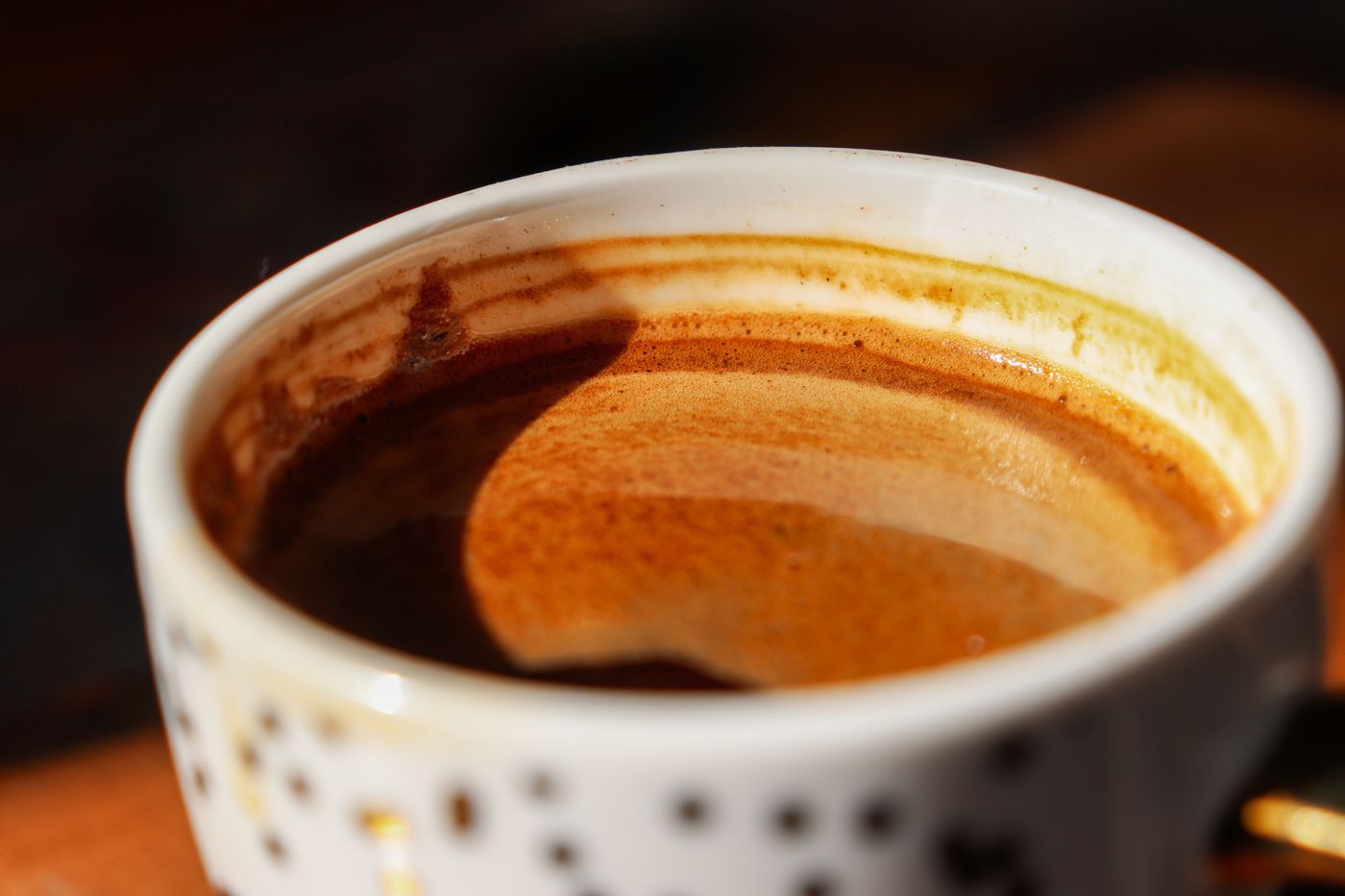
Our verdict: The Breville Barista Express is still the machine we hand most first-time buyers. It’s the rare all-in-one that gets the fundamentals right — a real burr grinder, dose and grind dials you’ll actually use, and a 54mm portafilter that pulls genuinely good espresso. It isn’t the fastest, the smallest, or the most hands-off machine you can buy, but it removes the single biggest beginner trap (not owning a grinder) and gets you making café-quality drinks the day it lands. Score: 8.3/10.
Check current price on Amazon →
Who it’s for (and who it isn’t)
Buy it if you want one box that does everything, you have a bit of counter space, and you’d rather learn on a machine that teaches you the craft than one that hides it.
Skip it if your counter is tight (look at the Breville Bambino Plus instead), you want automatic milk with zero learning curve, or you already own a great grinder and only want a brew head.
Everything below is the why behind that.
The headline feature: a grinder that’s actually built in
This is the whole reason the Barista Express exists, and it’s why we keep recommending it. Most beginners buy a machine, pull a few sad shots with stale pre-ground coffee, and never realize the grinder was the problem the whole time. The Barista Express closes that gap on day one.
You pour beans in the hopper, the conical burr grinder doses straight into the portafilter, and you pull your shot — one appliance, one footprint, one purchase. The grind-size dial and dose dial sit right on the front, so you’re learning the most important variable in espresso (grind) with your hands, not buried in a menu.
Is it the best grinder you can buy? No. A dedicated grinder like the Baratza Encore ESP will out-grind it and adjust finer. But “good grinder included” beats “great grinder you forgot to budget for” every time for a first setup — and you can always add a better grinder later without replacing the machine.
Espresso quality: better than it has any right to be
With fresh beans and a few minutes of dialing in, the Barista Express pulls espresso that holds its own against setups costing far more. The 54mm portafilter and pressurized/non-pressurized basket options mean you can start forgiving (pressurized) and graduate to the real thing (single- and double-wall baskets) as your technique improves.
The single thermocoil heating system holds temperature well enough for consistent shots once it’s warmed up. You won’t get the thermal stability of a dual-boiler prosumer machine, but at this price you’re not supposed to — and for milk drinks and everyday espresso, you won’t notice the difference.
Our sub-scores tell the story: espresso quality 8.3, ease of use 8.5, milk 7.5, value 8.8. It’s not the highest ceiling on any single axis — it’s the best balance at the price.
Milk steaming: a manual wand that rewards practice
The Barista Express has a manual steam wand, and that’s a deliberate fork in the road.
The upside: you learn to texture milk by hand, which means real microfoam, latte art if you want it, and a skill that transfers to any machine you ever own. The wand has enough power to get there.
The downside: there’s a learning curve. Your first few flat whites will be foamy and uneven. If “I just want a latte and it’s Monday” describes you, the auto-frothing Breville Bambino Plus or the touchscreen Breville Barista Touch will hand you textured milk with a button press. The Barista Express asks you to do the work — and pays you back in control.
Living with it: the day-to-day reality
A few things you only learn after a few weeks:
- It’s a big appliance. At ~12.5 inches wide plus clearance for the hopper and portafilter swing, it commands real counter space. Measure before you buy.
- The ~30-second heat-up feels slow next to Breville’s 3-second ThermoJet machines. It’s not a dealbreaker, but at 6:45 a.m. you’ll notice it.
- The water tank and bean hopper are generous, so you’re not refilling constantly.
- It’s a known quantity. Parts, accessories, baskets, and a decade of YouTube tutorials all exist for it — when something goes wrong or you want to upgrade a basket, the path is well-worn.
Where it frustrates
No machine is all upside. The honest gripes:
- Heat-up time — 30 seconds, when the rest of Breville’s lineup is near-instant.
- Footprint — it’s genuinely large for a small kitchen.
- The grinder is good, not great — fine to start, but enthusiasts will outgrow it and want a dedicated grinder within a year or two.
- Manual milk has a curve — a feature for some, a chore for others.
None of these are deal-breakers for the target buyer. They’re the trade-offs you accept for all-in-one value.
How it stacks up against the obvious alternatives
- vs the Breville Bambino Plus: the Bambino is smaller, heats in 3 seconds, and auto-froths — but has no grinder. Same money once you add a grinder, different trade-offs. We broke this exact decision down in our Barista Express vs Bambino Plus comparison.
- vs the Breville Barista Pro: the Pro adds a 3-second ThermoJet and an LCD shot display for more money. Worth it if the heat-up time bothers you; otherwise the Express is the value pick.
- vs going separates: a Bambino plus a real grinder gives a better long-term ceiling, but it’s two appliances and two decisions.
Bottom line
The Barista Express earns its reputation. It’s the machine we’d hand someone who said “I just want to get into espresso without it becoming a research project.” It gets the grinder question right out of the box, pulls genuinely good shots, and teaches you the craft if you want to learn it. The heat-up time and footprint are the price of that all-in-one simplicity — and for most first-time buyers, that’s a price worth paying.
Check current price on Amazon →
Frequently asked questions
Is the Breville Barista Express worth it in 2026?
For a first real espresso machine, yes. The all-in-one design (grinder included) and the balance of espresso quality, ease, and value still make it the default recommendation for beginners. Enthusiasts chasing the highest ceiling will eventually want separates, but as a starting point it’s hard to beat.
Does the Barista Express make good espresso?
With fresh beans and a few minutes of dialing in grind size, yes — genuinely good espresso that rivals far more expensive setups. The limiting factor is usually technique and bean freshness, not the machine.
Do I need a separate grinder?
No — the grinder is built in, which is the whole point. You can add a dedicated grinder later for a quality bump, but you don’t need one to get started.
Barista Express or Bambino Plus?
Barista Express if you want everything in one box and have the counter space. Bambino Plus if your kitchen is tight, you want automatic milk, or you’d rather pair it with a better separate grinder. Full breakdown in our head-to-head comparison.
How long does it take to heat up?
About 30 seconds. That’s slower than Breville’s ThermoJet machines (the Bambino, Barista Pro, and Barista Touch all heat in ~3 seconds), but fast enough that it won’t reshape your morning.
Is it the same as the Sage Barista Express?
Yes. Breville sells under the “Sage” name in the UK, Europe, and Australia. Same machine, different badge.
Specs at a glance
| Our score | 8.3 / 10 |
| Price | From $699 |
| Built-in grinder | Yes |
| Heat-up time | 30s |
| Portafilter | 54mm |
| Milk | Manual steam wand |
| Boiler | Single thermocoil |
| PID control | Yes |
| Width | 12.5" |
| Water tank | 2L |